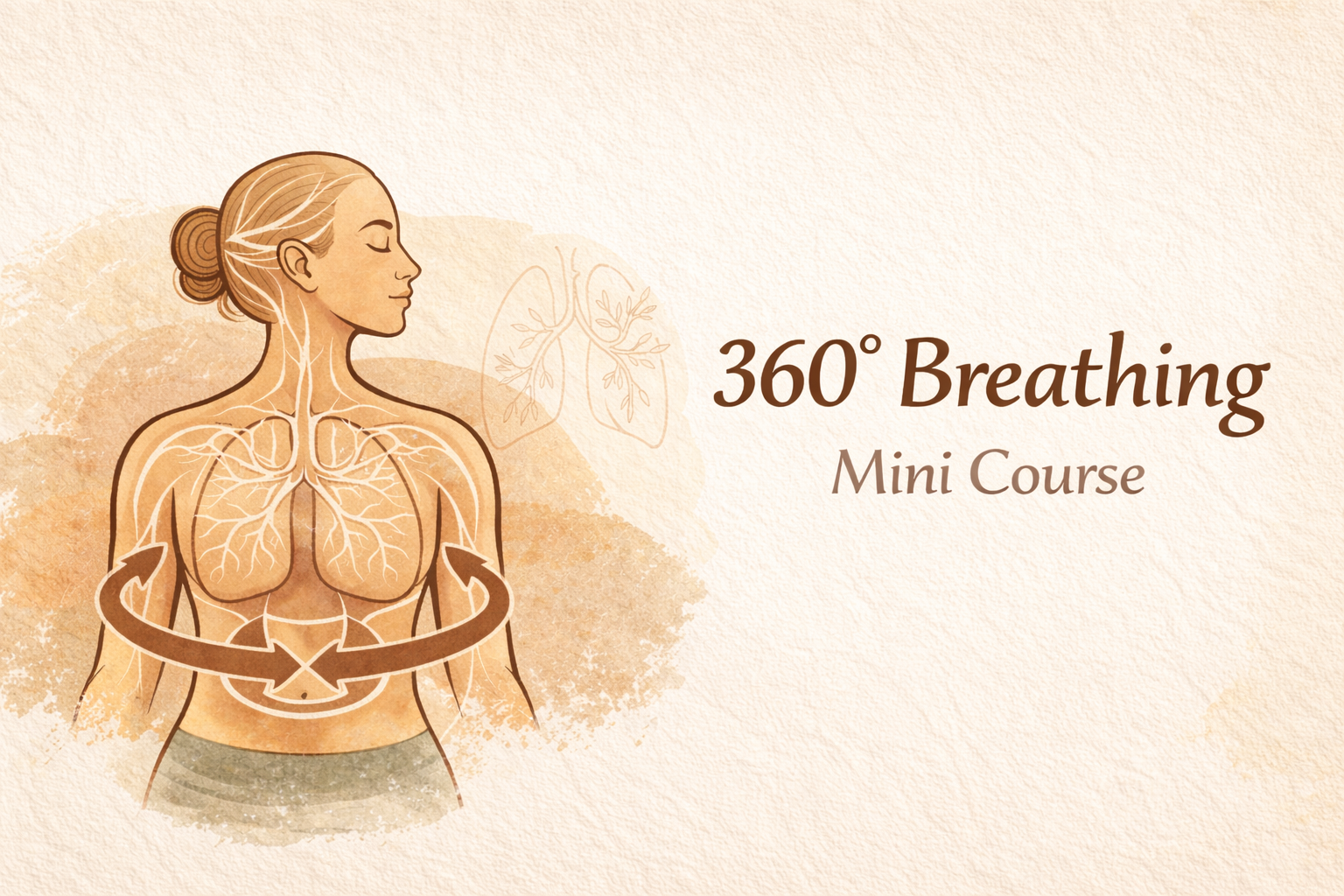
360 Breathing
This course helps you rebuild the foundation of how you breathe so your body can feel more supported, less tense, and more coordinated in movement.
If you have tried “deep breathing” before and it did not help, made you feel more braced, or stayed stuck in your chest or belly, this course offers a clearer approach.
Instead of forcing bigger breaths, you will learn how to create true 360° ribcage expansion, manage internal pressure without gripping, and use breath as a tool for support, space, and regulation.
By the end of the course, you will be able to:
feel true 360° ribcage expansion
recognize common compensations like lifting, flaring, or bracing
improve ribcage mobility for a smoother, less effortful inhale
reduce neck- and upper-chest-dominant breathing
build steadier support through the core without gripping
use a simple breathing practice you can return to when tension or stress patterns show up
This is not about breathing harder. It is about breathing smarter.
The course is approximately 1 hour total and can then be reused in 10 to 15 minute daily segments based on what your body needs.
-
-
Welcome
This welcome lesson introduces the intention behind 360° breathing and how restoring space, pressure balance, and breath options can support posture, movement, fascia, and nervous system regulation.
This welcome lesson introduces the intention behind 360° breathing and how restoring space, pressure balance, and breath options can support posture, movement, fascia, and nervous system regulation.
-
What to Sense in 360° Breathing
This lesson guides you through what to sense during 360° breathing, including where expansion begins, how the diaphragm and ribcage move, and how the exhale supports internal lift and spinal length.
This lesson guides you through what to sense during 360° breathing, including where expansion begins, how the diaphragm and ribcage move, and how the exhale supports internal lift and spinal length.
-
-
-
Lesson 1: Chest Breathing
This lesson explores chest breathing as a strategy, including rib-dominant breathing and high chest or neck-assisted patterns, and how each affects pressure, posture, and ease of movement.
This lesson explores chest breathing as a strategy, including rib-dominant breathing and high chest or neck-assisted patterns, and how each affects pressure, posture, and ease of movement.
-
Lesson 2: Belly Only Breathing
This lesson explains belly-dominant breathing, including when belly expansion leads the inhale and how limited rib involvement can affect pressure management, posture, and movement.
This lesson explains belly-dominant breathing, including when belly expansion leads the inhale and how limited rib involvement can affect pressure management, posture, and movement.
-
Lesson 3: Paradoxical Breathing
This lesson explains paradoxical breathing, where the belly draws in during the inhale and the chest lifts, and how this pattern affects pressure management, posture, and breathing efficiency.
This lesson explains paradoxical breathing, where the belly draws in during the inhale and the chest lifts, and how this pattern affects pressure management, posture, and breathing efficiency.
-
Lesson 4: Review of Postures
This lesson reviews common postural patterns and their most likely breathing tendencies, helping you understand how posture can influence breath strategy without defining it.
This lesson reviews common postural patterns and their most likely breathing tendencies, helping you understand how posture can influence breath strategy without defining it.
-
-
-
Lesson 1: Trying Different Ways to Inhale and Exhale
This lesson explores different inhale and exhale strategies, including breath size, pacing, and sound, and how they influence rib movement, internal pressure, and breathing efficiency
This lesson explores different inhale and exhale strategies, including breath size, pacing, and sound, and how they influence rib movement, internal pressure, and breathing efficiency
-
-
-
Lesson 1: Hook Lying Check In
This lesson uses hook lying as a simple position to observe breath patterns, rib movement, and internal pressure without added load or complexity.
This lesson uses hook lying as a simple position to observe breath patterns, rib movement, and internal pressure without added load or complexity.
-
-
-
Lesson 1: Inverted Breathing
This lesson introduces inverted breathing to support posterior rib expansion, diaphragmatic movement, and a natural organ lift on the exhale without abdominal bracing.
This lesson introduces inverted breathing to support posterior rib expansion, diaphragmatic movement, and a natural organ lift on the exhale without abdominal bracing.
-
Lesson 2: Single Sided Crocodile Breathing
This lesson introduces single-sided crocodile breathing to help redirect airflow into underused areas of the lungs while avoiding rib bracing against the prop.
This lesson introduces single-sided crocodile breathing to help redirect airflow into underused areas of the lungs while avoiding rib bracing against the prop.
-
Lesson 3: Single Sided Childs Pose
This lesson explores single-sided child’s pose as a way to redirect airflow into underused rib regions while supporting posterior and diagonal expansion.
This lesson explores single-sided child’s pose as a way to redirect airflow into underused rib regions while supporting posterior and diagonal expansion.
-
Lesson 4: Seated Posterior Expansion
This lesson introduces seated posterior expansion to help redirect breath into the back ribs while maintaining an upright ribcage and reducing belly-driven inhalation.
This lesson introduces seated posterior expansion to help redirect breath into the back ribs while maintaining an upright ribcage and reducing belly-driven inhalation.
-
-
-
Lesson 1: Finding A Neutral Pelvis
This lesson explores finding a neutral pelvis and how pelvic position influences pelvic floor expansion, pressure management, and breathing mechanics.
This lesson explores finding a neutral pelvis and how pelvic position influences pelvic floor expansion, pressure management, and breathing mechanics.
-
Lesson 2: Posterior Tensioned Expansion
This lesson explores a tensioned anterior pelvic tip and how creating anterior tilt with posterior chain support influences pelvic floor expansion and breathing mechanics.
This lesson explores a tensioned anterior pelvic tip and how creating anterior tilt with posterior chain support influences pelvic floor expansion and breathing mechanics.
-
Lesson 3: Single Sided Pelvic Floor Release
This lesson explores single-sided pelvic floor work and how asymmetrical positioning can support pelvic floor expansion, pressure balance, and breathing coordination.
This lesson explores single-sided pelvic floor work and how asymmetrical positioning can support pelvic floor expansion, pressure balance, and breathing coordination.
-
Lesson 4: Internal Rotation Rockback
This lesson focuses on creating space within the pelvic floor and restoring space in the hip socket through internal rotation.
This lesson focuses on creating space within the pelvic floor and restoring space in the hip socket through internal rotation.
-
-
-
Lesson 1: Neck Repositioning/ Eye Level Corrector
This lesson introduces neck repositioning to reduce neck-driven breathing, support cervical organization, and help level the eyes while maintaining rib and sternum position.
This lesson introduces neck repositioning to reduce neck-driven breathing, support cervical organization, and help level the eyes while maintaining rib and sternum position.
-
-
-
Lesson 1: 90-90 Two Different Emphases
This lesson explores the 90–90 position with two different emphases: restoring neutral pelvis and ribcage alignment, and then redirecting breath into the back ribs once upright organization is established.
This lesson explores the 90–90 position with two different emphases: restoring neutral pelvis and ribcage alignment, and then redirecting breath into the back ribs once upright organization is established.
-
-
-
Lesson 1: Side Lying with Block
This lesson introduces side-lying block breathing to encourage lateral rib expansion while maintaining rib softness and avoiding belly- or chest-driven breathing.
This lesson introduces side-lying block breathing to encourage lateral rib expansion while maintaining rib softness and avoiding belly- or chest-driven breathing.
-
Lesson 2: Stag Side Body Expansion
This lesson explores stag side-body expansion to support lateral rib expansion in an upright pelvic position while maintaining spinal organization.
This lesson explores stag side-body expansion to support lateral rib expansion in an upright pelvic position while maintaining spinal organization.
-
Lesson 3: Hip Shift with Lateral Expansion
This lesson introduces hip shift with lateral expansion to explore how controlled pelvic rotation can occur while maintaining soft, responsive rib expansion.
This lesson introduces hip shift with lateral expansion to explore how controlled pelvic rotation can occur while maintaining soft, responsive rib expansion.
-
-
-
Lesson 1: Posterior Oblique Sling Expansion
This lesson explores the posterior oblique sling and how breath-led expansion supports coordinated rotation, posterior rib expansion, and controlled return without bracing.
This lesson explores the posterior oblique sling and how breath-led expansion supports coordinated rotation, posterior rib expansion, and controlled return without bracing.
-
-
-
Swan with Roller
This lesson introduces swan with roller to support chest wall expansion and sternal lift while maintaining serratus support and avoiding low-back compression.
This lesson introduces swan with roller to support chest wall expansion and sternal lift while maintaining serratus support and avoiding low-back compression.
-
-
-
Lesson 1: Vacuum Hold for Expansion
This lesson explores vacuum holds as a way to experience passive recoil and internal lift after expansion, emphasizing subtlety, timing, and appropriate use.
This lesson explores vacuum holds as a way to experience passive recoil and internal lift after expansion, emphasizing subtlety, timing, and appropriate use.
-
-
-
Hook Lying - How Has Your Expansion Changed?
This lesson revisits hook lying as a check-in to notice changes in breath, rib expansion, and pressure management after completing other exercises.
This lesson revisits hook lying as a check-in to notice changes in breath, rib expansion, and pressure management after completing other exercises.
-
-
-
Heel Slides
This lesson introduces heel slides as a way to challenge your ability to maintain rib and pelvic organization while the legs move under light load.
This lesson introduces heel slides as a way to challenge your ability to maintain rib and pelvic organization while the legs move under light load.
-
Toe Taps
This lesson introduces toe taps as a progression to heel slides, increasing the challenge of maintaining rib and pelvic organization while the legs move.
This lesson introduces toe taps as a progression to heel slides, increasing the challenge of maintaining rib and pelvic organization while the legs move.
-
-
This course is for you if:
deep breathing has felt confusing, forced, or unhelpful
you tend to breathe into your chest, neck, or shoulders
you feel braced, compressed, or stuck in your ribs
stress tends to show up in your jaw, neck, or upper chest
you want a practical way to build more support through your breathing mechanics
What people are saying
“The RootForce breathing work has taught me how to release the muscles in my neck. It works every time and has eliminated my neck pain from trying to do everything from my neck. I have also discovered that the breathing sequences give me strain-free ways to empty constipated bowels. These practices have played a big role in my life.”
— Carol
“Kelly’s knowledge of the body and human movement runs deep. However, it is her ability to communicate nuance with clarity and warmth that will help you achieve meaningful change.”
— Christy J
“I am so grateful for Kelly’s wisdom and expertise. The lessons and guidance she has created offer a wealth of insights into breathing, mobility, pain relief, and so much more.”
— Mary T
Props
A few simple props are used throughout the course.
You can find the props here.