Coffee Enemas: My Personal Experience With a Controversial Practice (Despite Limited Science)
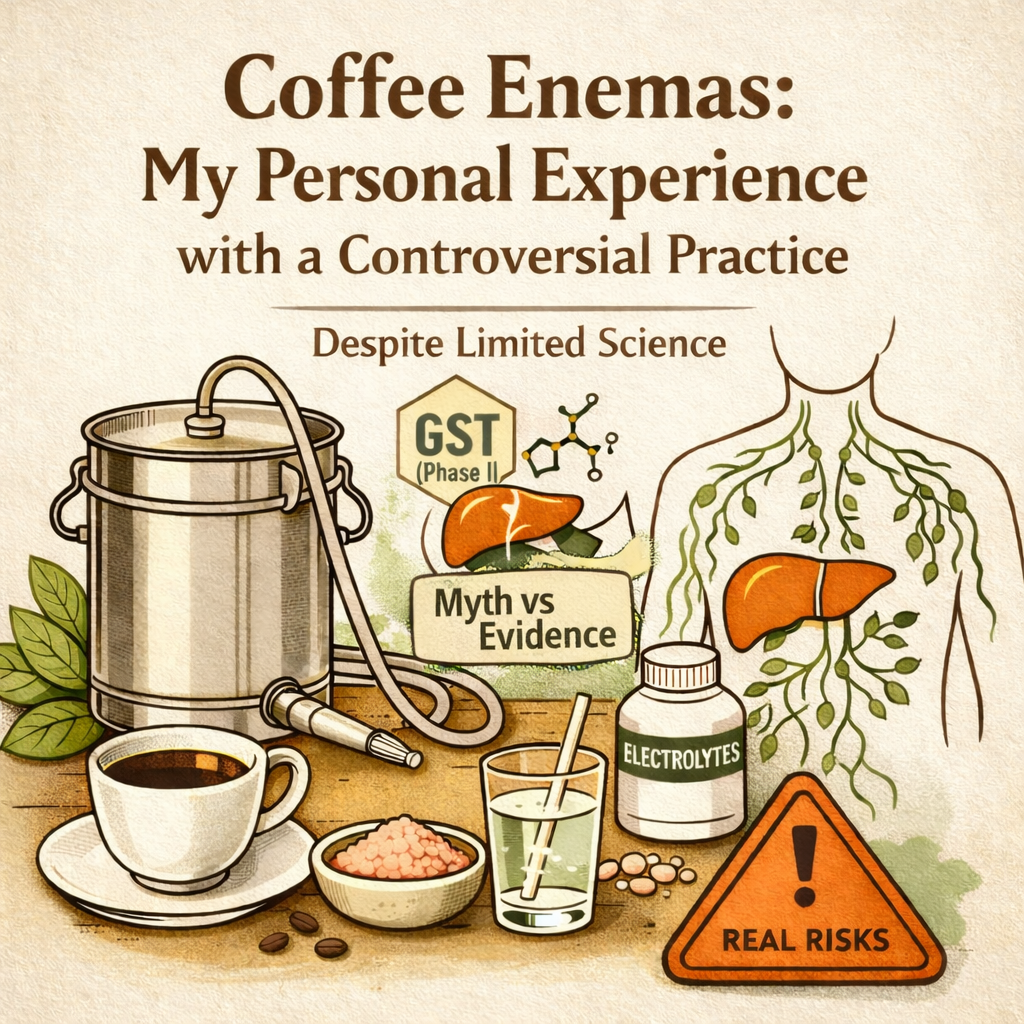
I'm going to be straight with you: coffee enemas are not well-studied. The scientific evidence for most of the health claims is limited at best. There are documented risks, including serious ones.
And yet, I use them. I find them helpful. And I'm going to share my experience while being honest about what we actually know versus what's mostly theory and personal observation.
This article is not medical advice. It's a transparent look at why this practice works for me, what the proposed mechanisms are (with their limitations), and how to think about safety if you're considering exploring this.
What I've Personally Experienced
I didn't start coffee enemas because I read compelling research. I started because I was dealing with:
Chronic constipation that wasn't responding well to other interventions
Persistent bloating and abdominal discomfort
A general feeling of being "backed up" and congested
Low energy and brain fog
After incorporating coffee enemas into my routine, I've noticed:
Immediate relief from bloating and abdominal pressure
A lighter feeling in my body (less puffiness)
Improved regularity between enema sessions
Better mental clarity on the days I do them
An overall sense that my system is "working better"
Is this placebo? Is it just the mechanical effect of any enema? Is it actually the coffee doing something special? I honestly don't know for certain. What I know is that it feels helpful to me, and I'm not alone—many people in alternative health communities report similar experiences.
The Glutathione Theory: What We Actually Know
You'll often hear claims that "coffee enemas increase glutathione by 600-700%!" Let me be straight with you about where that comes from and what the evidence actually shows.
The origin of the glutathione claim:
A 1982 study fed mice a diet that was 20% green coffee beans (eaten orally, not as an enema)
This increased glutathione S-transferase enzyme activity by 600-700% in their livers
People have extrapolated this to mean coffee enemas do the same in humans
What we know about coffee compounds:
Cafestol and kahweol (compounds in coffee) can influence phase II detoxification enzymes in laboratory and animal studies
These compounds affect the glutathione S-transferase (GST) enzyme family
Coffee consumed orally has documented effects on liver enzyme activity in humans
The one human study on coffee enemas and glutathione: A randomized crossover study actually tested whether coffee enemas increase glutathione in healthy volunteers. They compared coffee enemas to drinking coffee and measured:
Glutathione levels
Oxidative damage markers
Antioxidant capacity
The results: Neither coffee enemas nor drinking coffee increased glutathione levels or reduced oxidative damage. In fact, antioxidant capacity actually decreased in both groups.
My honest take: The glutathione claims for coffee enemas are based on animal studies using oral coffee consumption, not human studies of enemas. The one human study that actually tested this found no glutathione increase.
So why do I still use them? Not because I believe in the glutathione story. I use them because of how they make me feel.
Here's what I notice that's hard to put into scientific terms: the energy feels different than when I drink coffee. It's cleaner—less jittery, less anxious. When I drink coffee, I get a buzz that can feel like I'm just masking the tired. With coffee enemas, it feels like my cells are actually firing better, like there's less congestion in the way. I feel more clear than wired.
Is that a real physiological difference related to glutathione or detox pathways? Based on the evidence, probably not. But the subjective experience is distinct enough that I keep coming back to this practice.
The Lymphatic Connection: More Theory Than Fact
I often hear people (including practitioners) talk about coffee enemas "moving lymph" or "draining the system." Let's be clear: this is largely speculative.
What I think might actually be happening:
Mechanical relief: Clearing the lower bowel reduces abdominal pressure, which can affect how your diaphragm moves and how your abdomen feels
Reduced congestion: When you're less bloated and backed up, everything feels lighter—your body has less "traffic" to manage
Nervous system shift: The warmth, the ritual, and possibly the caffeine create some kind of systemic response
Do coffee enemas directly "drain your lymph"? I can't say that with confidence. But I do notice that when my digestion is working better, I tend to feel less puffy and congested overall. Whether that's truly lymphatic or just the result of multiple interconnected systems working better together, I'm not sure.
My Recommended Supplies
If you decide to try coffee enemas, quality equipment matters:
Enema Kit: Premium Enema Stainless Steel Enema Kit for Colon Cleanse
Stainless steel bucket is durable, easy to clean, and lasts forever (no replacing cheap plastic buckets)
The 6.75-foot silicone hose gives me plenty of length to position comfortably without feeling constrained
Silicone tip is flexible and more comfortable than hard plastic
Flow control valve lets me adjust the speed easily - I can slow it down if I need to
Comes with two complete hose assemblies, which is great for having a backup or keeping one extra clean
Medical grade silicone materials are BPA-free and phthalate-free
Everything is detachable for thorough cleaning between uses
The bucket doesn't tip when hanging, which matters when you're trying to relax
Why I use this coffee:
USDA Organic and Fair Trade certified - I want clean coffee without pesticides or chemicals for this practice
Light roast specifically formulated for enemas - preserves the beneficial compounds better than dark roasts
Medium grind is perfect for my French press method and doesn't clog my equipment
High in palmitic acid and caffeine - even though the glutathione claims aren't proven, I like the consistent potency
Specialty grade from top 3% of global harvests - the quality and consistency matter when you're doing this regularly
Made in USA with batch consistency - I know what I'm getting every time
Mold-free organic - this is critical since I'm using it rectally
One 1-pound bag gives me 25-40 enemas depending on strength, which is good value for weekly use
Real, Documented Risks
This is the part where I get serious. A systematic review of case reports documents serious adverse events including:
Colitis and proctocolitis (inflammation of the colon/rectum)
Infections and sepsis
Electrolyte disturbances
Rare deaths
These are not just theoretical risks. They've happened to real people.
Do NOT use coffee enemas if you have:
Inflammatory bowel disease (Crohn's or ulcerative colitis)
Rectal bleeding, fissures, or significant hemorrhoids
Recent bowel surgery
Active GI infection, fever, or unexplained symptoms
Kidney or heart conditions where electrolyte shifts could be dangerous
History of electrolyte imbalance or dehydration
Pregnancy (discuss with your healthcare provider first)
Get immediate medical help if you experience:
Severe abdominal pain
Fever or chills
Rectal bleeding
Dizziness or fainting
Signs of dehydration (rapid heart rate, confusion, extreme weakness)
Persistent diarrhea
Critical Safety Guidelines
I don't take the risks lightly, and you shouldn't either. Here are my non-negotiables:
Temperature: Body temperature or cooler. Test it on your wrist like you would a baby's bottle. Too hot can cause serious burns.
Frequency: I do this once a week, sometimes twice if I'm feeling particularly sluggish. More than 2-3 times per week increases your risk of irritation, dependence, and electrolyte issues.
Hydration and minerals: I drink extra water on coffee enema days and use Purium Superfoods to support my electrolyte balance from whole food sources.
Listen to your body: If you feel overstimulated, jittery, or anxious, you're either using too much coffee or this isn't right for you. If you have pain or any concerning symptoms, stop.
Cleanliness: Clean your equipment thoroughly after every use.
Get My Complete Protocol
You'll also get my weekly newsletter with more of my personal health experiments, drainage strategies, and practical wellness tips.
If You’re Looking for Better Drainage Overall
Coffee enemas can be one tool, but they are not the foundation of good drainage. The practices that have made the biggest difference for me are actually much simpler:
daily movement, like short walks after meals or movement snacks throughout the day
breathing work to support pressure changes and lymphatic pumping
gentle self-massage for areas like the neck, armpits, and abdomen
abdominal massage to support motility and digestive flow
consistent hydration with mineral support from real food
anti-inflammatory eating to reduce the overall burden on the system
These are the kinds of practices I teach inside the 28-Day Lymph Reset.
The program gives you a step-by-step way to support drainage through:
video demonstrations of lymphatic self-massage
abdominal support for digestive congestion
movement routines that encourage flow
my hydration and mineral approach
food templates that support fluid balance
a simple daily structure that helps you put the pieces together
If you want a more complete system instead of relying on one tool, you can learn more about the 28-Day Lymph Reset here.
My Honest Bottom Line
I use coffee enemas because they help me feel better. The scientific evidence for the specific benefits is limited. The risks are real and documented.
If you're curious about trying them:
Go in with realistic expectations
Take the safety precautions seriously
Start slowly and pay attention to how you respond
Don't rely on them as your only strategy for feeling better
You don't need to do extreme things to support your body. But if this is something that makes sense for you and you can do it safely, I'm here to share what's worked for me.